
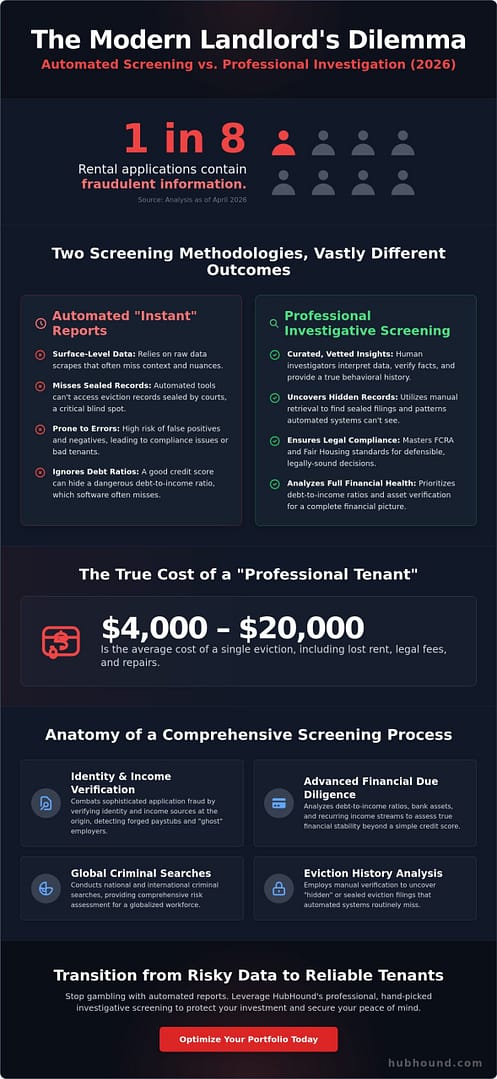
Did you know that 1 in 8 rental applications analyzed in April 2026 contain fraudulent information? Relying on automated software to catch these discrepancies is a gamble that often leads to “professional tenants” occupying your units. Advanced Landlord/Tenant Background Checks require more than just a credit pull; they demand a vetted, investigative approach to uncover what automated systems miss. You deserve a screening process that prioritizes accuracy over speed.
It’s understandable to feel anxious about Fair Housing Act compliance or the $4,000 to $20,000 average cost of a single eviction. You want reliable, long-term tenants without the legal headaches of evolving regulations like the proposed Housing FIRST Act. This 2026 guide teaches you how professional investigative screening identifies high-quality tenants and protects your property investment from costly litigation. We will examine the shift toward manual verification and how to maintain full legal compliance in an era where eviction records are increasingly sealed.
Key Takeaways
- Transition from raw data snapshots to multi-layered investigative processes to verify an applicant’s true behavioral history.
- Execute Lanlord/Tenant Background Checks that prioritize debt-to-income ratios and international criminal searches over simple credit scores.
- Identify why automated “instant” reports often miss critical red flags that only hand-picked investigative screening can catch.
- Master Fair Credit Reporting Act (FCRA) standards to ensure your adverse action notices are legally sound and defensible.
- Leverage curated insights to secure reliable, long-term tenants while shielding your property portfolio from the risk of expensive litigation.
What Are Landlord/Tenant Background Checks in 2026?
In the current rental market, a standard credit report is merely the starting point. High-performance Lanlord/Tenant Background Checks have evolved into multi-layered investigative processes that verify an applicant’s financial reliability and behavioral history with surgical precision. The 2026 regulatory environment, characterized by proposed federal legislation like the Housing FIRST Act, demands a shift from raw data to curated insights. Relying on “instant” consumer-grade reports creates a liability gap that professional investigative screening is designed to close.
The distinction between basic data and professional screening lies in the depth of the inquiry. While automated tools scrape public records, they often fail to account for the nuances of modern fraud. With 1 in 8 rental applications containing fraudulent information as of April 16, 2026, the tenant screening process must act as a sophisticated filter. It’s about finding the best fit for your property ecosystem, ensuring that every data point is vetted and verified before it reaches your desk. This investigative approach identifies high-quality tenants while shielding your investment from the risks associated with incomplete data.
The Core Components of a Modern Screening Report
A comprehensive report in 2026 prioritizes identity verification to combat sophisticated application fraud. Beyond simple database hits, effective screening includes a deep criminal history analysis that looks past statewide records to identify patterns of behavior. Crucially, eviction history tracking must now account for “hidden” filings. Because several jurisdictions have moved to seal records automatically within 60 days of filing, automated tools often miss the very red flags that lead to an average eviction cost of $4,000 to $20,000. Professional screening identifies these gaps through manual record retrieval and verification.
Why Professional Oversight Matters
Automated algorithms are prone to false positives and false negatives, which can lead to Fair Housing Act litigation or the placement of a “professional tenant.” Human investigators interpret complex legal records with a level of precision that software cannot replicate. They understand the context of a debt-to-income ratio or a dismissed civil case. For high-value assets, a hand-picked screening partner providing Lanlord/Tenant Background Checks offers the optimization necessary to protect your portfolio. This level of professional oversight ensures your decisions are based on compatibility and quality, reducing the cognitive load of property management while maintaining full legal compliance.
The Anatomy of a Comprehensive Screening Process
A truly comprehensive screening process moves beyond a simple pass/fail metric. Effective Lanlord/Tenant Background Checks dissect an applicant’s history through multiple lenses to ensure compatibility with your property ecosystem. This requires a shift from passive data collection to active investigation. It identifies risks that automated software routinely ignores, such as debt-to-income ratios that exceed 50% despite a seemingly healthy credit score.
Looking at a credit score in isolation is a mistake. An applicant might maintain a 700 score while drowning in monthly obligations that jeopardize their ability to pay rent. Professional screening identifies these hidden financial pressures. It also includes verifying your rights under the Fair Credit Reporting Act to ensure every step of the financial audit remains compliant and defensible. When you understand the full financial picture, you reduce the risk of future defaults.
Forged paystubs and “ghost” employers are increasingly common in the modern rental market. Data from April 2026 indicates that 12.5% of rental applications contain some form of fraudulent information. Our process vets income streams at the source, ensuring the employer actually exists and the reported earnings are legitimate. We also conduct national and international criminal searches to account for a globalized workforce, providing a level of security that basic statewide searches cannot match.
Advanced Financial Due Diligence
Financial stability isn’t just about a paycheck; it’s about consistent cash flow and liquid assets. We verify bank assets and recurring income streams to identify patterns of instability that a score might hide. For high-end commercial properties, we apply corporate due diligence to verify the legitimacy of business entities. This hand-picked approach ensures that your tenant’s financial foundation is as solid as the lease they sign.
Behavioral and Legal History
Behavioral history is often the best predictor of future performance. We search for civil litigation history to identify habitual litigants who use the legal system to avoid payment. When residency discrepancies appear, we utilize surveillance techniques and skip tracing to uncover unlisted addresses. This investigative art is how we spot “fake” references, ensuring you speak with actual previous landlords rather than the applicant’s friends. If you need a more thorough look at an applicant’s history, consider our professional investigative screening solutions.
Automated Software vs. Professional Investigative Screening
Instant results are a marketing promise, not an investigative reality. When you perform Lanlord/Tenant Background Checks through automated platforms, you’re essentially renting access to a cached database. These databases often suffer from significant lag times; they frequently miss records filed within the last 30 days. In a climate where eviction records are increasingly sealed to protect tenant privacy, relying on a static algorithm is a high-risk strategy. Professional screening provides the necessary context that a machine simply cannot see.
Algorithms struggle with common names and identity theft. A “hit” on a “John Smith” might belong to your applicant or someone three states away. Without human vetting, you risk a Fair Housing Act violation by denying an applicant based on a false positive. You can find more details on compliance and consumer protections in the FTC guide on tenant screening. Automated software prioritizes volume, but professional investigators prioritize accuracy and defensible data.
The Problem with Automated “Instant” Reports
Outdated databases are the primary weakness of “instant” screening services. Public record updates aren’t instantaneous; it can take weeks for a new eviction filing to appear in a commercial scraper’s system. Additionally, algorithms lack the nuance to interpret criminal “hits” correctly. They don’t distinguish between a dismissed charge and a conviction, potentially leading you toward a discriminatory housing decision. Human oversight ensures that every piece of data is current and legally relevant to your selection criteria.
The Investigative Advantage
Investigative firms use non-public databases and manual courthouse checks to ensure data integrity. This is vital when an applicant has lived in multiple states or countries. For applicants who are business owners, we can conduct specialized workplace investigations to verify their operational history and professional reputation. Instead of a 50-page data dump, you receive a curated narrative that highlights relevant risks. This level of precision is essential for modern Lanlord/Tenant Background Checks.
Consider the math behind your screening choice. A basic automated report might cost $25, but a single bad placement costs between $4,000 and $20,000 in eviction fees and lost rent. Investing in a hand-picked, investigative report is a fraction of the cost of a failed tenancy. It’s about optimizing your portfolio for long-term stability rather than short-term savings. Professional investigators do the heavy lifting of research so you can make decisions with quiet confidence.
Navigating Legal Compliance and Fair Housing Standards
Legal compliance in 2026 is a dynamic landscape that requires more than a cursory glance at federal guidelines. The Fair Credit Reporting Act (FCRA) remains your primary roadmap for conducting Lanlord/Tenant Background Checks. It mandates that you obtain written consent before initiating any search and follow strict procedures if you deny an applicant. If you take adverse action, you must provide a formal notice that includes the contact information of the reporting agency. This isn’t just a formality; it’s a critical defense against litigation that can save you from the $20,000 average cost of a legal dispute.
The Fair Housing Act (FHA) has evolved to focus heavily on the concept of disparate impact. A blanket policy of rejecting anyone with a criminal record is no longer legally defensible. Instead, you must assess the nature and severity of an offense on a case-by-case basis to avoid discriminatory outcomes. Nationwide, we’re seeing a trend toward stricter local laws, including inflation-adjusted fee caps that limit what you can charge for screening to $65.86 in certain jurisdictions. Staying ahead of these shifts is essential for maintaining a profitable and legally sound portfolio.
Compliance as a Risk Mitigation Strategy
Documenting every step of your screening process creates a robust chain of evidence. If a discrimination claim arises, your records must show that you applied the same vetted criteria to every applicant. Professional investigators often utilize missing adults research techniques to legally verify residency history when gaps appear in an application. This investigative approach ensures your data is verified at the source rather than relying on potentially faulty automated scrapers that miss records older than seven years.
Data Privacy and Security
Handling Personally Identifiable Information (PII) carries heavy ethical and legal obligations. You’re responsible for the secure storage and delivery of sensitive background reports. In an environment where data breaches are a constant threat, your screening partner must provide encrypted delivery systems to protect applicant privacy. This isn’t just about compliance; it’s about building a professional reputation as a reliable and ethical landlord. Secure your property investment and ensure full legal compliance by selecting vetted Lanlord/Tenant Background Checks from an expert investigative firm.
Optimizing Your Portfolio with HubHound Screening
Selection is the most critical phase of property management. HubHound provides Lanlord/Tenant Background Checks that function as a precision filter for your real estate portfolio. We don’t just scrape data; we curate insights. Our investigators apply decades of field experience to every file, ensuring the person signing your lease is exactly who they claim to be. This level of scrutiny transforms a routine administrative task into a robust asset protection strategy. We act as your specialized expert curator, doing the heavy lifting of research so you can focus on growth.
Unlike generic directory sites or automated software platforms, HubHound operates as a professional investigative firm. This distinction is vital in 2026. While competitors focus on high-volume, low-accuracy reports, we prioritize the quality of the data and the compatibility of the tenant. Our hand-picked reports provide a level of depth that “instant” services cannot match. We verify the narrative behind the data, ensuring that every red flag is investigated and every success is verified. This approach eliminates the choice paralysis often felt by owners when faced with conflicting automated data points.
Beyond the Report: A Strategic Partnership
High-risk applications require more than an automated “yes” or “no” score. We offer a consultative approach for complex files, such as business owners with multiple income streams or applicants with international histories. Our team integrates these Lanlord/Tenant Background Checks into your broader risk management ecosystem. By acting as your expert filter, we alleviate the pressure of making quick decisions on incomplete information. This partnership ensures your decisions are driven by verified facts rather than the urgent need to fill a vacancy. We provide the insider knowledge necessary to navigate the best-kept secrets of the screening world.
Getting Started with Professional Screening
Efficiency is the hallmark of a professional operation. To begin, we help you establish consistent screening criteria that align with current nationwide legal standards. Our intake process is streamlined to respect your time and cognitive load. We require basic applicant details and signed consent forms to launch a deep-dive investigation. Once our vetted report is delivered, you can finalize the lease with quiet confidence. This rhythmic efficiency mirrors the software tools we promote, ensuring that finding a solution is as streamlined as the solution itself. Stop gambling with automated snapshots and start making informed decisions with a hand-picked investigative partner. Your property investment deserves the protection of a professional filter.
Future-Proof Your Property Investment Strategy
Effective property management requires moving beyond the limitations of “instant” automated data. By prioritizing human-led Lanlord/Tenant Background Checks, you eliminate the blind spots created by cached databases and sealed records. This investigative approach ensures that every tenant in your portfolio is vetted for financial stability and behavioral history. You’ve learned that professional oversight is the most reliable defense against the $20,000 average cost of an eviction and the complexities of 2026 Fair Housing regulations.
Success in the modern rental market depends on the quality of your information. HubHound provides comprehensive reports that go beyond automated algorithms, delivering court-ready due diligence through licensed investigators with over 30 years of industry experience. Our hand-picked insights help you avoid the pitfalls of professional tenants and fraudulent applications. Take the next step toward a more secure and profitable portfolio today.
Protect your property with vetted Landlord/Tenant screening from HubHound and gain the clarity needed to make confident placement decisions. Your investment deserves a screening process that is as professional and reliable as the properties you manage.
Frequently Asked Questions
Is it legal to run a background check on a potential tenant without their consent?
No, you cannot legally perform Lanlord/Tenant Background Checks without explicit written consent from the applicant. The Fair Credit Reporting Act (FCRA) mandates this authorization to protect consumer privacy. If you bypass this step, you expose yourself to significant federal penalties and civil lawsuits. Always keep a digital or physical copy of the signed authorization for at least five years to maintain a clear compliance trail.
What is the difference between a credit score and a tenant screening report?
A credit score is a three-digit numerical representation of creditworthiness, while a tenant screening report is a comprehensive dossier of behavioral history. A score doesn’t show eviction filings, criminal convictions, or previous landlord disputes. Professional screening provides the necessary context, such as debt-to-income ratios and civil litigation history, which a simple score often obscures. This distinction is critical for identifying applicants who maintain high scores while hiding legal issues.
How long does a professional landlord/tenant background check typically take?
A professional investigative background check typically takes between 24 and 72 hours to complete. While automated instant tools provide immediate results, they often rely on outdated cached data. High-quality screening requires manual verification of current court records and employment details. This brief waiting period is a necessary trade-off for ensuring the data is 100% accurate and court-ready, which safeguards your portfolio from the financial instability of poor placement.
Can a landlord deny an applicant based on a criminal record in 2026?
You can deny an applicant based on a criminal record, but you must avoid blanket bans to remain compliant with federal standards. Your policy should focus on specific offenses that pose a direct threat to property or safety. Document your reasoning for each denial to defend against disparate impact claims. This case-by-case assessment ensures your selection process is both safe and legally defensible under current nationwide guidelines.
What should I do if an applicant provides a forged paystub or employer?
Immediately deny the application if you detect a forged paystub or a ghost employer. Attempting to negotiate with a fraudulent applicant is a high-risk move that often leads to future legal proceedings. Document the specific discrepancies found during the Lanlord/Tenant Background Checks and issue a formal adverse action notice. Professional investigators are trained to spot these sophisticated forgeries that automated algorithms frequently miss during the initial intake.
How often should I re-screen long-term tenants?
Re-screen your long-term tenants every 12 to 24 months or at each lease renewal. Financial circumstances and legal histories can change significantly over a two-year period. Regular audits ensure that your current residents still meet your original qualification standards. This proactive approach helps identify potential risks, such as new civil judgments or criminal activity, before they escalate into problematic tenancy issues or property damage that impacts your asset value.
Are online “instant” background checks reliable for high-end properties?
Online instant checks are generally insufficient for high-end properties where the financial stakes are higher. These services prioritize speed over depth, often missing filings from the last 30 days or international records. High-value assets require the optimization of hand-picked investigative reports that verify data at the source. Using a professional filter ensures you aren’t making high-stakes decisions based on incomplete or outdated public record scraping that lacks investigative vetting.
What is an Adverse Action letter and when must I send one?
An Adverse Action letter is a mandatory legal notice you must send if you deny an applicant or charge a higher security deposit based on background check data. This letter must include the name and contact information of the screening agency that provided the report. Failing to send this notice is a direct violation of the FCRA. It’s a critical step in your risk mitigation strategy that ensures transparency and protects you from potential regulatory fines.

Article by
Joel R. Manley | President | Hubhound Investigations | OR PI-ID#: 90432 | 111 SW Fifth Avenue, Suite 3150 Portland, Oregon 97204 | 971-442-8170
Joel is licensed as a private investigator in Oregon and Tennessee. Joel started his career in 1987 serving as a Military Police Officer and Military Police Investigator.
After ending his military tour of duty, Joel became a civilian Police Officer and Deputy Sheriff. Joel took his strong background in Hostage Negotiations, Mediation and Conflict Resolution, with him to patrol some of the highest crime areas in SE Portland.
Joel was awarded Deputy of the Year for his efforts and for drastically reducing the crime rate in the area he patrolled. As a Deputy Sheriff, Joel assisted in leading a Neighborhood Livability Program that was nationally recognized for having the most innovative and progressive approach to policing.
In 2018, Joel retired as a Deputy Sheriff and founded Hubhound Investigations. Joel played an integral role in Hubhound Investigations receiving an A+ Accredited Business rating from the Better Business Bureau (BBB).
In his off time, Joel enjoys spending time with his wife, adult children and Hubhound’s Happiness Ambassador, Nya. Joel also enjoys Scuba Diving and Kayaking.
Disclaimer
DISCLAIMER: This article is provided for general informational and educational purposes only. It is not intended to constitute legal advice, professional investigative advice, or instruction to engage in any unlawful activity. Laws governing private investigations, surveillance, recording, tracking, access to information, evidence collection, privacy, trespass, licensing, and related investigative activities vary by jurisdiction and are subject to change.
Any investigative techniques, tactics, procedures, scenarios, or legal proceedings discussed in this article are presented for informational purposes and should not be interpreted as authorization or encouragement to use a particular method. Private investigators and members of the public are responsible for understanding and complying with all applicable federal, state, and local laws, licensing requirements, court rules, and professional standards.
The circumstances of every investigation and legal matter are different. Information contained in this article should not be relied upon as a substitute for advice from a qualified attorney or other appropriate licensed professional regarding a specific situation. No attorney-client, investigator-client, or other professional relationship is created by reading or using this information.