
A standard rental application is no longer a simple background check; it’s a high-stakes investigative process where one compliance error can trigger a costly legal battle. Establishing robust screening criteria for rental applicants in Portland requires more than just checking credit scores. It demands a rigorous, risk-based framework that protects property assets while adhering to strict regulatory standards. You likely feel the mounting pressure of identifying sophisticated fraud or interpreting complex criminal histories while staying within the boundaries of fair housing laws.
This guide provides the professional standards you need to mitigate risk and ensure your evaluation process is both legally defensible and highly efficient. You’ll master the essential benchmarks for evaluating risk and learn how to implement a selection process that reduces tenant turnover and prevents property damage. We will examine the essential components of a modern screening policy, including income-to-rent ratios and the necessity of individualized criminal assessments that satisfy current regulatory expectations.
Key Takeaways
- Align your selection process with national Fair Housing standards by defining objective, written benchmarks for every applicant.
- Identify sophisticated identity fraud and look beyond basic credit scores to evaluate an applicant’s true financial risk.
- Transition to a nuanced criminal history review that replaces blanket bans with compliant, case-by-case assessments.
- Establish a multi-tiered framework for screening criteria for rental applicants in Portland to keep your policies transparent and legally defensible.
- Discover why professional investigative screening identifies critical risks that automated software often overlooks.
The Foundation of Rental Applicant Screening Criteria
Screening criteria are the objective benchmarks used to filter prospects during the tenant screening process. These standards act as a protective barrier for your investment. They ensure that every applicant is measured against the same data points. Without these benchmarks, selection becomes subjective and legally vulnerable. Use a written policy to establish your screening criteria for rental applicants in Portland. This transparency builds trust and provides a clear defense if your decisions are ever questioned. A publicly available policy also saves time. It discourages unqualified applicants from applying, which streamlines your administrative workflow and reduces wasted effort.
The Fair Housing Act dictates the boundaries of your selection process. It prohibits discrimination based on race, religion, sex, and other protected classes. Your criteria must balance property protection with inclusive housing access. Effective screening isn’t about exclusion; it’s about identifying candidates who meet specific, non-discriminatory risk thresholds. This balance is critical for maintaining property security while avoiding costly litigation. By focusing on objective data rather than personal impressions, you create a selection environment that is both fair and profitable.
The Core Components of a Compliant Policy
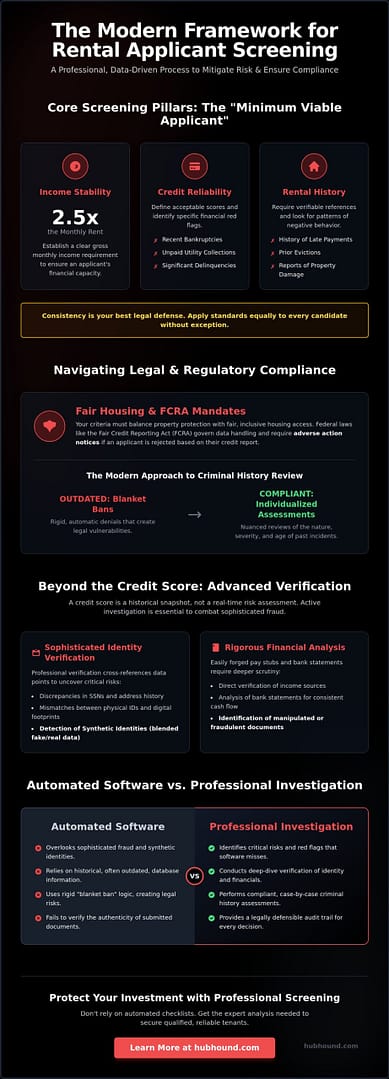
Start by defining your “minimum viable applicant.” This is the baseline profile a candidate must meet to be considered for a lease. Focus on three primary pillars: income stability, credit reliability, and past rental performance. Establishing these thresholds early prevents discriminatory bias from entering the decision making process.
- Income Thresholds: Set a clear gross monthly income requirement. A common standard is requiring income that is 2.5 times the monthly rent.
- Credit Standards: Define acceptable credit scores or identify specific red flags like recent bankruptcies or unpaid utility collections.
- Rental History: Require verifiable references and look for patterns of late payments, evictions, or property damage.
Consistency is your best legal defense. Apply these standards to every candidate without exception to ensure your process remains defensible.
Legal Frameworks and Regulatory Compliance
Federal laws like the Fair Credit Reporting Act (FCRA) govern how you handle sensitive data. You must provide adverse action notices if an applicant is rejected based on their credit report. Modern property management is shifting toward individualized assessments. This is especially true for criminal records. Instead of blanket bans, evaluate the nature, severity, and age of past incidents. Metropolitan regulations often require a “low-barrier” approach. This means allowing applicants to provide supplemental evidence to explain negative factors. High-level screening criteria for rental applicants in Portland now prioritize this nuanced, data-driven strategy over rigid, outdated checklists. This shift requires a more sophisticated investigative approach than simple automated software can provide.
Financial and Identity Verification: Beyond the Credit Score
A credit score is a historical snapshot; it’s not a real-time risk assessment. Relying solely on a three-digit number overlooks the increasing prevalence of identity fraud and sophisticated document manipulation. When you establish screening criteria for rental applicants in Portland, you must implement a verification layer that scrutinizes the person behind the paperwork. Modern fraud often involves synthetic identities where real and fabricated data are blended to create a clean credit profile. This requires a shift from passive data collection to active investigation. It’s about verifying the integrity of the data points before they’re used to make a decision.
Sophisticated Identity Verification Techniques
Verify every government-issued ID against authoritative public record databases. Look for discrepancies in Social Security numbers and cross-reference the applicant’s stated address history with their credit file. If an applicant provides an ID that doesn’t match their digital footprint, it’s a red flag for identity theft. Professional landlord/tenant screening services provide the deep-dive verification needed to catch these inconsistencies before a lease is signed. Detecting these synthetic identities early prevents the long-term financial damage caused by professional fraudsters who move from property to property.
Analyzing Financial Reliability
Traditional pay stubs are easily forged with online templates. Scrutinize bank statements to confirm the actual flow of funds. This is especially vital for self-employed applicants or those with non-traditional income streams. Look beyond the total income and calculate the debt-to-income ratio. High debt levels often predict long-term instability even if the income meets your minimum requirements. Reference Portland’s rental screening code as a benchmark for how metropolitan standards regarding documentation are evolving.
While the law provides the legal boundaries, your internal policy should define how you handle thin credit files. Applicants with limited credit history aren’t always high-risk. They simply lack a track record. In these cases, prioritize utility payment history and verifiable rental references to build a more accurate profile of financial responsibility. This approach ensures your screening criteria for rental applicants in Portland remain objective and fair to all qualified candidates while protecting your property from unnecessary financial exposure. Focus on the consistency of the data rather than just the final score.
Evaluating Criminal History and Rental Records
Evaluating criminal history requires a shift from automated rejection to analytical review. Using rigid blanket bans creates significant legal exposure and often ignores the reality of rehabilitation. Instead, modern screening criteria for rental applicants in Portland should focus on identifying specific behaviors that threaten property safety or financial stability. Distinguish between arrests, which don’t prove conduct, and final convictions. Focus your risk assessment on “person crimes” involving violence or “property crimes” like arson or significant vandalism. These are direct indicators of potential risk to your community and assets. Pending charges also require a cautious approach; wait for a final disposition whenever possible to ensure your decision is based on verified facts rather than allegations.
The Individualized Assessment Process
When a record appears, perform an individualized assessment rather than issuing an immediate denial. Don’t just look at the charge title. Consider the nature and severity of the offense and how much time has passed since it occurred. An isolated incident from a decade ago carries different weight than a pattern of recent behavior. Age at the time of the incident is also a critical factor. Document every step of this decision making process in a standardized format. This paperwork is your primary defense against discrimination claims. Always allow applicants to provide mitigating factors. These might include:
- Evidence of successful completion of probation or parole.
- Letters of recommendation from social workers or previous landlords.
- Proof of enrollment in or completion of rehabilitation programs.
This inclusive approach ensures your screening criteria for rental applicants in Portland remain compliant with evolving fair housing standards while protecting your investment.
Verifying Rental History and Eviction Records
Rental records are often incomplete or intentionally obscured. Applicants might omit addresses where they had disputes, unpaid balances, or evictions. Use professional Skip Tracing / Locate Investigations to uncover these hidden residencies. This process reveals the true timeline of an applicant’s housing history by tracking their digital and physical footprints. When you find an eviction, look for the context. Was it a one-time financial crisis during a documented emergency, or a pattern of lease violations? Professional references from verified property managers are far more reliable than personal calls to friends or family. These experts provide objective data on payment punctuality, property care, and noise complaints. If a reference seems suspicious, Witness Interviews & Statements can help clarify the applicant’s past behavior and reliability. This investigative depth ensures you select tenants who’ll respect the property and their neighbors.
How to Implement a Multi-Tiered Screening Strategy
Implementing a structured, five-step strategy transforms screening from a reactive task into a proactive risk management system. Start by establishing your written criteria and publicizing them to every potential applicant. This transparency prevents misunderstandings and sets clear expectations before the first fee is collected. A well-defined policy for screening criteria for rental applicants in Portland serves as your operational blueprint; it ensures that every candidate is processed with the same level of scrutiny and fairness. Once the criteria are set, move immediately into the administrative review to verify that the application is complete and ready for investigative processing.
The third step involves executing a deep-dive background and credit investigation. This is the stage where automated summaries often fail, as they lack the context needed for high-stakes decisions. Relying on professional Landlord/Tenant screening ensures that you’re working with verified data rather than surface-level snapshots. Following the investigation, perform an individualized assessment for any flagged records, as discussed in previous sections. This step is critical for maintaining compliance while accurately weighing risk. Finally, finalize the process by issuing either a formal approval or a legally compliant adverse action notice.
The Administrative Review Phase
The administrative phase is your first line of defense against fraud and inefficiency. Ensure every occupant over the age of 18 has submitted a separate, fully completed application. Standardize the collection of screening fees and holding deposits to maintain a clear financial trail. Check for material omissions or falsified information immediately. A missing signature or an unverifiable phone number is often the first sign of a problematic applicant. Catching these errors early saves time and prevents unqualified candidates from moving deeper into your selection funnel.
Adverse Action and Legal Notifications
Rejecting an applicant requires strict adherence to federal and local notification standards. If you deny a candidate based on their credit or background report, you must provide a formal adverse action notice. This document should list the specific reasons for denial based on your pre-established screening criteria for rental applicants in Portland. Clearly state which benchmarks were not met and provide the contact information for the reporting agency used. If an applicant requests a reconsideration or provides supplemental information, handle the request through a standardized, documented process to ensure continued compliance and transparency.
Why Professional Investigative Screening Outperforms Software
Speed should never compromise security. Many landlords opt for “instant” background check software to save time, yet these platforms often rely on fragmented data that lacks context. When you define screening criteria for rental applicants in Portland, you need the certainty that only an investigative approach provides. Software might flag a name match, but it won’t distinguish between a minor dismissed charge and a serious conviction. It won’t verify if a pay stub is a digital forgery. Professional investigators bridge this gap by scrutinizing the details that algorithms ignore. They provide a layer of validation that protects your assets and your reputation.
The Investigator Advantage
Professional screening utilizes non-public databases and direct courthouse-level research to uncover records that digital scrapers miss. This depth is essential for identifying “person crimes” or undisclosed evictions that pose a direct threat to your property. Human-led witness interviews and statement verification allow for a level of clarity that software cannot achieve. By speaking directly with professional references, an investigator can identify the nuances of an applicant’s past behavior. This rigorous process significantly reduces the “false positives” that often lead to unfair denials and subsequent legal challenges. It ensures your selection process is based on verified facts rather than algorithmic guesses. You gain a clearer picture of risk, allowing for more confident decision making.
Comprehensive Risk Management
Effective screening is a component of a larger security strategy. For owners of mixed-use or high-value properties, integrating tenant checks with workplace investigations ensures total site integrity. This holistic approach protects your interests from every angle. By partnering with a specialized corporate investigation firm, you gain access to high-level corporate due diligence that standard property management tools lack. This level of oversight is vital for identifying sophisticated fraud and managing complex liability across your entire portfolio.
Secure your property and ensure your screening criteria for rental applicants in Portland are backed by professional-grade intelligence. Don’t leave your investment to chance with automated tools that only tell half the story. Implement an investigative framework that prioritizes accuracy and compliance. HubHound’s professional screening services provide the rigorous assessment you need to mitigate risk effectively.
Elevate Your Tenant Selection Standards
Effective risk mitigation requires a shift from passive data collection to active investigative analysis. You’ve now got the framework to move beyond basic credit scores and implement a multi-tiered strategy that prioritizes accuracy and compliance. Focus on individualized assessments and sophisticated identity verification to protect your assets from the rising threat of synthetic fraud. Establishing rigorous screening criteria for rental applicants in Portland is the first step toward long-term property stability. This professional approach ensures your selection process is both legally defensible and highly efficient. It’ll help you identify high-quality tenants while minimizing the cognitive load of complex regulatory requirements.
Protect your investment with HubHound’s expert screening and investigation services. Our team features licensed investigators with over three decades of industry experience. We provide specialized expertise in detecting identity fraud and synthetic identities that automated software often misses. We offer comprehensive support for legal and corporate clients nationwide to ensure every placement is a secure one. Don’t leave your property management strategy to chance; partner with a trusted investigative expert. You have the tools to build a more resilient and profitable portfolio today.
Frequently Asked Questions
What are the most common legal reasons to deny a rental applicant?
Insufficient income, poor credit history, and negative rental references are the most defensible reasons for denial. Most professional standards require a gross monthly income of at least 2.5 times the rent. Credit reports should show a consistent history of on-time payments. Verified past evictions or significant property damage are also valid grounds for rejection under a standard selection policy.
Can I legally deny an applicant based on their criminal record?
You can deny an applicant only if their specific conviction poses a direct threat to property safety or resident well-being. Blanket bans on all criminal history are generally considered discriminatory and legally risky. You must evaluate the nature, severity, and age of the offense. Focus your risk assessment on recent convictions for violent crimes or property destruction rather than non-violent misdemeanors.
How do I verify a rental applicant’s income if they are self-employed?
Request at least two years of tax returns and three to six months of recent bank statements to verify self-employment income. Look for consistent deposits that align with the reported earnings on their tax filings. This investigative approach ensures that the screening criteria for rental applicants in Portland are met with verified financial data rather than unverified verbal claims or digital pay stubs.
What is an “individualized assessment” in tenant screening?
An individualized assessment is a process where you evaluate an applicant’s specific circumstances rather than applying a rigid, automated rule. This is particularly relevant when reviewing criminal records or past financial setbacks. You consider mitigating factors like the time passed since an incident, the applicant’s age at the time, and evidence of rehabilitation. This method ensures your selection process remains fair and compliant.
How long does a professional tenant background check typically take?
A professional background check typically takes between 24 and 72 hours to complete. While automated software provides instant results, these are often incomplete or contain errors. Thorough investigations require time to verify employment, contact previous landlords, and conduct courthouse-level research. This timeline ensures you receive a high-quality, verified report that minimizes your risk of a bad placement or property damage.
What should I do if an applicant provides falsified information?
Deny the application immediately if you discover material omissions or falsified information. Providing false data is a legitimate, non-discriminatory reason for rejection in any professional screening policy. Document the specific discrepancy, such as a manipulated ID or an undisclosed address. Retain this evidence in your files to justify the adverse action notice if the applicant challenges your decision later.
Are there limits on how much I can charge for a screening fee?
Many jurisdictions limit screening fees to the actual cost of the background check and the administrative labor involved. You should only charge enough to cover the investigative expenses and your time spent processing the application. Always provide a written receipt and be prepared to refund the fee if the report isn’t run. Check your local regulations for specific caps on these fees.
How do Fair Housing laws impact my ability to choose the best tenant?
Fair Housing laws require you to apply your selection standards consistently to every applicant without exception. These regulations prohibit discrimination based on protected classes like race, religion, and familial status. By using objective screening criteria for rental applicants in Portland, you ensure that your choice is based on verifiable risk factors like financial stability and rental history rather than personal bias or subjective impressions.

Article by
Joel R. Manley | President | Hubhound Investigations | OR PI-ID#: 90432 | 111 SW Fifth Avenue, Suite 3150 Portland, Oregon 97204 | 971-442-8170
Joel is licensed as a private investigator in Oregon and Tennessee. Joel started his career in 1987 serving as a Military Police Officer and Military Police Investigator.
After ending his military tour of duty, Joel became a civilian Police Officer and Deputy Sheriff. Joel took his strong background in Hostage Negotiations, Mediation and Conflict Resolution, with him to patrol some of the highest crime areas in SE Portland.
Joel was awarded Deputy of the Year for his efforts and for drastically reducing the crime rate in the area he patrolled. As a Deputy Sheriff, Joel assisted in leading a Neighborhood Livability Program that was nationally recognized for having the most innovative and progressive approach to policing.
In 2018, Joel retired as a Deputy Sheriff and founded Hubhound Investigations. Joel played an integral role in Hubhound Investigations receiving an A+ Accredited Business rating from the Better Business Bureau (BBB).
In his off time, Joel enjoys spending time with his wife, adult children and Hubhound’s Happiness Ambassador, Nya. Joel also enjoys Scuba Diving and Kayaking.
Disclaimer
DISCLAIMER: This article is provided for general informational and educational purposes only. It is not intended to constitute legal advice, professional investigative advice, or instruction to engage in any unlawful activity. Laws governing private investigations, surveillance, recording, tracking, access to information, evidence collection, privacy, trespass, licensing, and related investigative activities vary by jurisdiction and are subject to change.
Any investigative techniques, tactics, procedures, scenarios, or legal proceedings discussed in this article are presented for informational purposes and should not be interpreted as authorization or encouragement to use a particular method. Private investigators and members of the public are responsible for understanding and complying with all applicable federal, state, and local laws, licensing requirements, court rules, and professional standards.
The circumstances of every investigation and legal matter are different. Information contained in this article should not be relied upon as a substitute for advice from a qualified attorney or other appropriate licensed professional regarding a specific situation. No attorney-client, investigator-client, or other professional relationship is created by reading or using this information.